Foreign exchange—commonly known as forex or FX—sits at the very heart of today’s global economy. Whether a multinational corporation pays an overseas supplier, a central bank manages its currency reserves, or a student swipes a multi-currency travel card abroad, foreign exchange makes these transactions possible.
Every day, more than US $7.5 trillion flows through the forex market (Bank for International Settlements, 2022)—making it the largest and most liquid financial market in the world. And unlike stock exchanges that operate from a single physical location, the foreign exchange market runs 24 hours a day across major financial hubs—from Sydney and Singapore to London and New York.
This guide breaks down what foreign exchange is, how it works, its core functions, its features, and why it remains essential to the global economy. Written in a clear, research-backed, EEAT-compliant style, it is ideal for students, global travelers, finance professionals, and businesses.
Foreign exchange refers to the conversion of one currency into another. Currencies are always traded in pairs—for example, USD/EUR or INR/GBP—where the exchange rate reflects the value of one currency relative to the other.
Foreign exchange powers the global financial system by enabling:
All these require currency conversion, which happens through a decentralised, over-the-counter (OTC) network of financial institutions—not on a single central exchange.
Foreign exchange is therefore more than a marketplace—it’s a foundational mechanism that keeps global trade and financial flows alive.
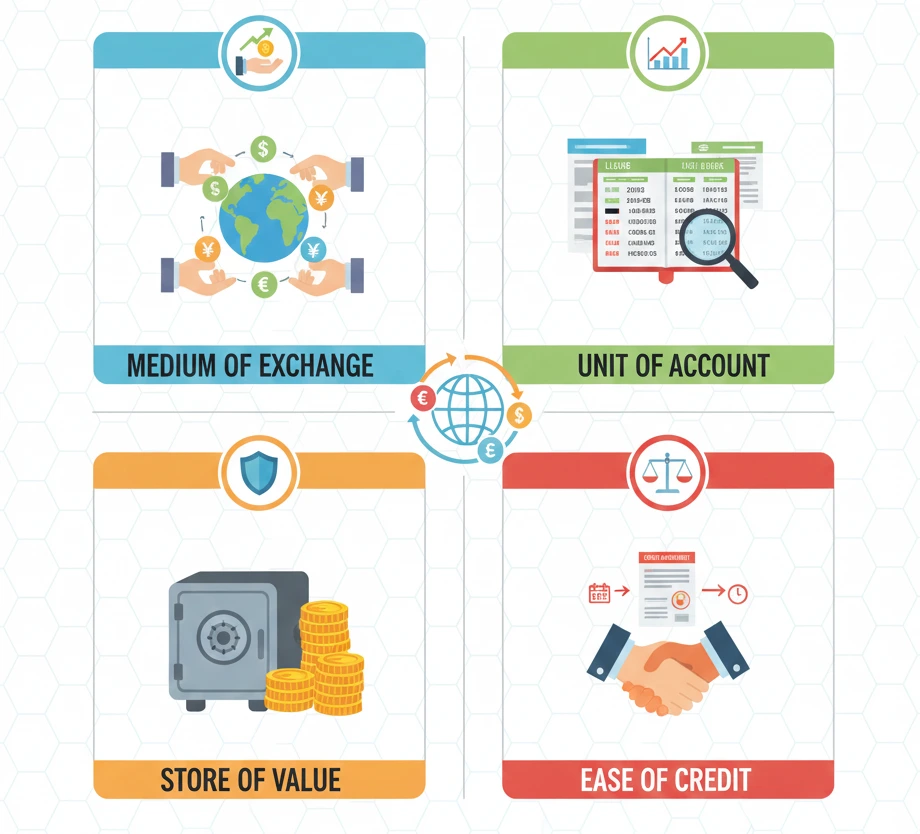
The foreign exchange market performs six major functions that make international trade and economic cooperation possible. These functions go beyond currency conversion—they support credit, risk management, liquidity, and global stability.
The most fundamental function of foreign exchange is currency conversion. It enables:
Modern FX systems make these conversions seamless through instruments like:
Without this forex function, cross-border economic activity would slow dramatically.
International trade often requires short-term credit. Forex markets facilitate this through:
These instruments allow importers to receive goods now and pay later—a crucial feature for global supply chains. According to the World Trade Organization (WTO), 80–90% of global trade relies on trade finance.
Exchange rates fluctuate constantly due to economic data, political events, monetary policy, and market sentiment. To avoid unexpected losses, businesses use hedging instruments such as:
These tools allow companies to lock in exchange rates for future transactions. For multinational corporations, hedging is essential to protect operating margins and maintain pricing stability.
Foreign exchange markets determine the real-time value of currencies. They do this through continuous buying and selling by market participants worldwide.
Speculators—often hedge funds, banks, and proprietary traders—play an important role:
While speculation can increase volatility at times, it ultimately makes the market more efficient.
The forex market ensures that foreign currencies are always available when needed. This function is vital for:
High liquidity ensures narrow spreads, rapid execution, and lower transaction costs.
Central banks rely on foreign exchange markets to:
For example, the Reserve Bank of India (RBI) frequently uses its FX reserves to smooth excessive volatility in the rupee.
Foreign exchange, therefore, plays a key role in macroeconomic stability, not just trade.
Forex is an extraordinary market—unlike any other in terms of scale, liquidity, and accessibility. Here are its defining characteristics:
With over $7.5 trillion traded daily, forex is:
High liquidity ensures competitive pricing for businesses and travelers alike.
There is no central forex exchange. Trading happens electronically through:
This decentralisation ensures uninterrupted operation and immense global participation.
The FX market runs 24 hours a day, five days a week, moving across time zones:
Sydney → Tokyo → Singapore → London → New York
This feature is essential because global trade, news events, and economic data flow continuously.
Participants include:
This diversity enhances resilience and liquidity.
Forex is not limited to spot transactions. Other instruments include:
Each instrument serves a distinct purpose—from hedging to speculation.
The FX market has embraced:
Innovation has made forex accessible to everyday travelers and small businesses.
Foreign exchange plays a foundational role in global commerce. Its importance spans across multiple dimensions:
Companies buy raw materials, machinery, and finished goods from around the world. FX allows them to:
Without FX, international trade would be impossible.
Investors need forex to buy foreign stocks, bonds, and real estate. Similarly, governments borrow and lend across borders in different currencies.
Foreign exchange enables:
These flows fuel global economic growth.
Millions of people travel, study, or work abroad every year. Foreign exchange ensures:
This mobility supports the global tourism and education industries.
Central banks use FX markets to:
Foreign exchange is a powerful instrument of economic security.
Despite digital wallets, stablecoins, and central bank digital currencies (CBDCs), foreign exchange continues to be indispensable.
As long as countries have their own currencies, the forex market will remain a cornerstone of global activity.
Understanding the complexities of foreign exchange isn’t always easy for everyday users. This is where modern fintech platforms step in—making forex transparent, affordable, and user-friendly.
For travelers, students, and remote workers abroad, such platforms remove the confusion traditionally associated with banks and money changers.
Foreign exchange is one of the most critical pillars of the global economy. It enables international trade, investment flows, monetary stability, global travel, and cross-border payments. Its functions—from facilitating payments to providing liquidity and hedging risk—ensure that the world economy remains connected.
With its high liquidity, decentralised structure, and continuous operation, the forex market will continue to play a defining role in global finance. And with modern digital platforms simplifying currency conversion, accessing foreign exchange is now easier, cheaper, and more transparent than ever.
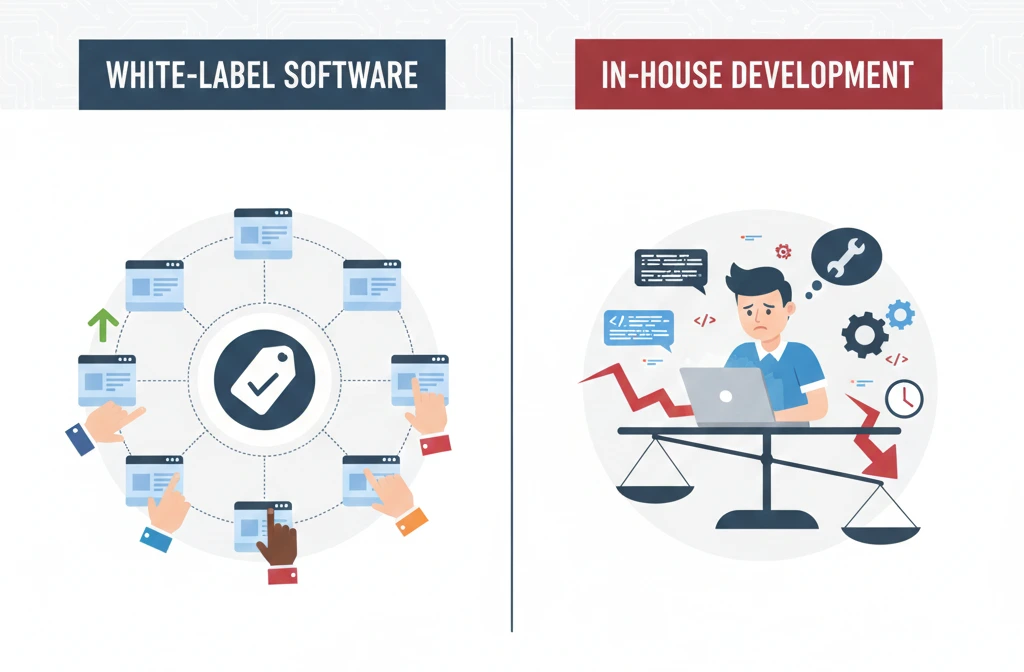
If you're evaluating white-label vs in-house remittance technology, platforms like RemitSo can help you launch quickly with compliant, scalable infrastructure—without the cost and complexity of a full engineering build.
Need Help Launching Your Remittance Business?
The core functions include currency conversion, credit facilitation, hedging, price discovery, liquidity provision, and support for economic stability.
Spot, forward, futures, options, and swap transactions are the main types.
By supply and demand, interest rate differentials, inflation, geopolitical events, central bank policies, and global capital flows.
It enables payments in multiple currencies, stabilises prices, and ensures liquidity for importers and exporters.
Exchange rate volatility, geopolitical risks, liquidity risks, and counterparty risks.
Through hedging tools such as forwards, futures, options, and swaps.
Economic growth, inflation, interest rates, political stability, and market sentiment.
Through banks, money service operators, fintech apps, or digital wallets that perform currency conversion.